

Introduction: The Evolution of Grain Handling Equipment
For decades, the grain industry has relied on mechanical conveyors—augers, belt conveyors, and bucket elevators—to move harvest from storage to transport. While effective, these systems come with inherent limitations: grain damage from metal flights, labor-intensive bin cleanouts, and fixed positioning that restricts flexibility.Enter the pneumatic grain conveyor, commonly known as a grain vac.
This technology has transformed how modern farms, commercial grain elevators, and port facilities handle bulk commodities. By using air rather than mechanical force, grain vacs offer a gentler, more versatile, and increasingly essential alternative to traditional methods .
What is a Grain Vac and How Does It Work?
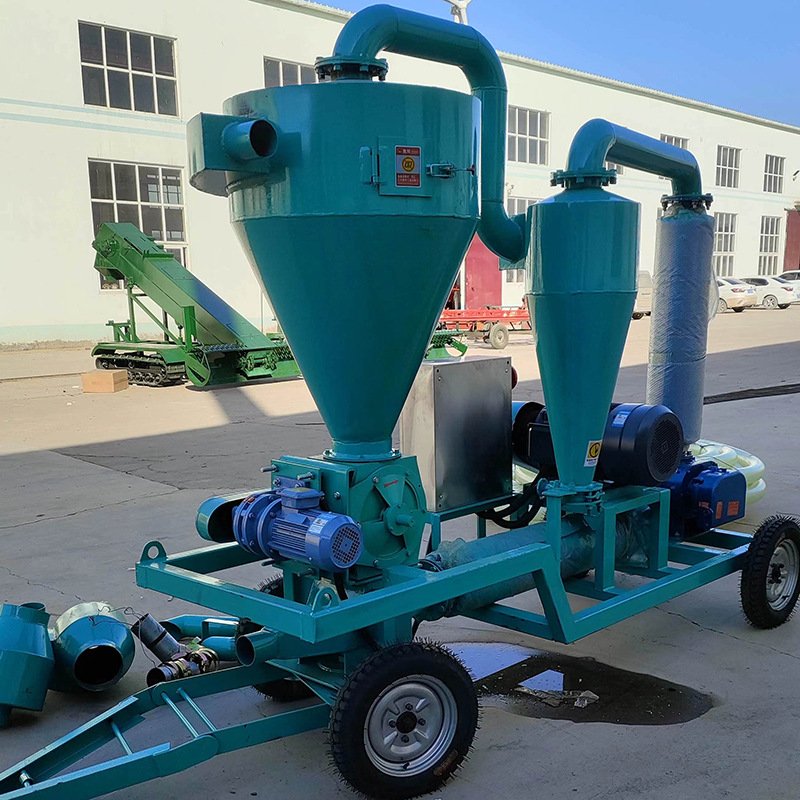
At its core, a grain vac is a pneumatic conveying system designed to transport granular materials—corn, wheat, soybeans, rice, and more—through enclosed piping using airflow . Unlike augers that physically push grain, these machines use air pressure to move product with minimal mechanical contact.
The Core Physics: Negative Pressure Suction vs. Positive Pressure Conveying
Understanding the grain suction machine working principle requires examining its dual-action design:
Negative Pressure (Suction Phase): A high-pressure blower creates vacuum at the intake nozzle. This negative pressure draws grain into the hose from bins, trucks, or ground piles .
Positive Pressure (Conveying Phase): Once separated from the air stream, grain enters the pressure side of the system, where positive air pressure pushes it through discharge piping to the destination .
This two-stage approach explains why pneumatic grain conveyor systems outperform mechanical alternatives in both reach and flexibility.
Step-by-Step Breakdown of the Pneumatic Suction Cycle
- Intake: The operator positions the suction nozzle in the grain pile. Air entering with the grain ensures consistent flow.
- Hose Transport: Grain travels through flexible or rigid piping to the machine.
- Cyclone Separation: Air and grain enter a cyclone separator where centrifugal force separates heavier grain from lighter air and dust .
- Rotary Airlock: A rotary airlock grain valve meters grain into the pressure line while maintaining air seal integrity.
- Pressure Conveying: Grain is pushed through discharge piping to trucks, silos, or processing equipment.
- Filtration: Exhaust air passes through dust collection systems to capture fines.
Anatomical Breakdown: 4 Critical Components of a Commercial Grain Vac
Every commercial grain vac relies on four essential systems working in harmony. Understanding these components helps operators make informed purchasing decisions.
1. High-Pressure Blowers (Roots Blower vs. Centrifugal Fan)
The blower serves as the system’s heart. It generates the vacuum for suction and the pressure for conveying. Two primary technologies dominate the market:
Roots Blower: Operating on the positive displacement principle, Roots blowers deliver consistent airflow regardless of pressure fluctuations in the conveying line . This characteristic is critical for preventing line blockages when pipeline resistance increases due to bends or elevation changes. In grain vac applications, Roots blowers excel at maintaining steady performance across varying distances and crop types .
Centrifugal Fan: While effective for high airflow at low pressures, centrifugal fans struggle with the higher pressure requirements of long-distance grain conveying .
For most commercial operations, a roots blower grain vac offers superior reliability and consistent throughput.
🔗 To learn more about why Roots blowers outperform centrifugal fans in preventing blockages, read our detailed technical comparison in the Karanze technical library.
2. Heavy-Duty Rotary Airlock Valves
The rotary airlock grain valve serves as the critical interface between the vacuum and pressure sides of the system. It meters grain from the cyclone separator into the pressure conveying line while maintaining an air seal.
Key design considerations:
- Clearance tolerances: Tight rotor-to-housing clearances minimize air leakage
- Material selection: Cast iron or abrasion-resistant steel for longevity
- Drive configuration: Variable speed for throughput control
Without a properly engineered airlock, system efficiency drops dramatically as air bypasses the product stream.
3. Cyclone Separators & Dust Filtration Systems
Cyclones use centrifugal force to separate grain from the conveying air stream. Air enters tangentially, spiraling downward as grain particles are thrown to the walls and collected at the base .
Dust filtration removes fine particles from exhaust air, protecting both operators and the environment. Options range from simple cyclone-only designs to systems with secondary baghouse filtration.
4. Wear-Resistant Hoses and Polyurethane Elbows
Grain is abrasive. Moving it at high speed creates significant wear on piping and hoses. Commercial grain vacs address this with:
- Stainless steel flex hoses: Superior abrasion resistance for suction lines
- Polyurethane elbows: Replaceable wear components at high-stress bends
- Aluminum tubes: Smooth internal surfaces reduce friction and extend service life
Grain Vac vs. Traditional Augers & Belt Conveyors
| Feature / Metric | Pneumatic Grain Vac | Screw Auger | Belt Conveyor |
|---|---|---|---|
| Flexibility & Mobility | ★★★★★ (Hoses reach tight spots, multiple positions) | ★★ (Rigid, fixed angle) | ★★★ (Limited movement) |
| Bin Cleanout Capability | Complete floor cleanout—zero dead zones | Leaves residual grain at bottom | Not suitable |
| Grain Damage Rate | Minimal—adjustable airflow design | High—metal flights pinch grain | Very low |
| Labor Requirement | Single-person operation | Multi-person position adjustment | Multi-person setup |
| Dust Control | Excellent—enclosed system with filtration | Poor—open dust generation | Moderate |
| Investment Cost | Higher initial | Lower initial | Moderate |
Grain vacs offer distinct advantages in cleaning confined spaces and eliminating the back-breaking labor associated with manual sweeping. As one operator noted, “They save a lot of back-bending bin cleanout work” .
What Crops Can You Transfer with a Pneumatic Grain Conveyor(Grain Vac)?
Pneumatic grain conveyors handle a wide spectrum of commodities :
- Corn / Maize: Excellent conveying efficiency with standard airflow settings
- Wheat: Moderate airflow—adjust to prevent kernel damage
- Soybeans & Beans: Lower speed, gentle handling to prevent splitting
- Paddy / Rice: Combined with aspiration for dust removal
- Barley & Oats: Lightweight grains require reduced feed rates to prevent system overloading
- Sunflowers: Special attention to airflow metering
For different crop types, operators adjust the air throttle to match product characteristics—regular grains run with fully open throttle, while lighter crops require partial closure to maintain optimal capacity .
Top Applications: Where Are Grain Vacs Used Most Efficiently?
1. Grain Bin Cleanout
Bin cleaning is where grain vacs demonstrate their greatest value. Unlike sweep augers that leave residual grain, a vacuum grain conveyor extracts product from corners and along floors with zero dead zones. The standing floor sweep attachment enables complete recovery of remaining grain from bin floors .
2. Truck & Trailer Loading/Unloading
Rapid truck turnaround is essential for harvest efficiency. Grain vacs transfer product directly from trucks to storage or vice versa, often achieving capacities of 8,000 bushels per hour or more .
3. Emergency Grain Transfer
When grain heats, spoils, or bins fail, every minute counts. Grain vacs provide emergency transfer capabilities, moving compromised product to safe storage or processing.
4. Barge & Vessel Handling
Ports and terminals use grain vacs for ship unloading and holds cleaning, where traditional conveyors cannot access confined spaces.
Conclusion & Next Steps: Choosing the Right Setup for Your Operation
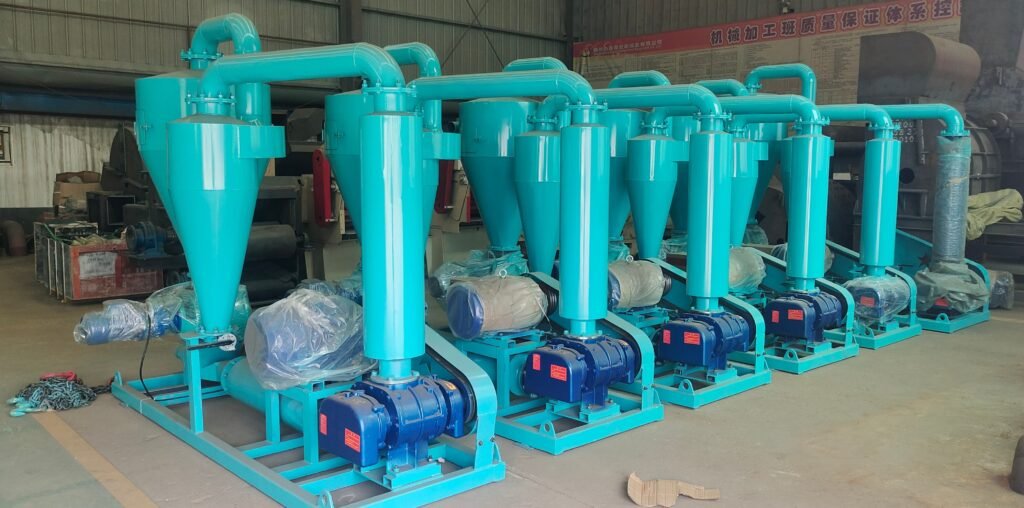
The pneumatic grain conveyor has evolved from a specialized tool to essential equipment for modern grain handling. From the grain suction machine working principle based on negative/positive pressure cycling to the critical role of roots blower grain vac configurations, understanding this technology enables informed equipment decisions.
Looking for a reliable, high-capacity grain vac tailored for your farm or commercial storage? [Contact the Karanze Engineering Team Today] or click the WhatsApp button below for instant equipment sizing and factory-direct pricing.