

Selecting the wrong Grain Vacuum Conveyor can cripple your harvest logistics—causing bottlenecks, frequent blockages, or unacceptable damage to high-value crops. For commercial storage facilities and large-scale farming operations, understanding the engineering principles behind pneumatic conveying is essential.
This guide breaks down the critical grain vacuum conveyor selection parameters that separate efficient material handling from costly downtime. We’ll examine five key factors through the lens of real-world field conditions.
1. Conveying Capacity (TPH): Matching Tons Per Hour to Your Workflow
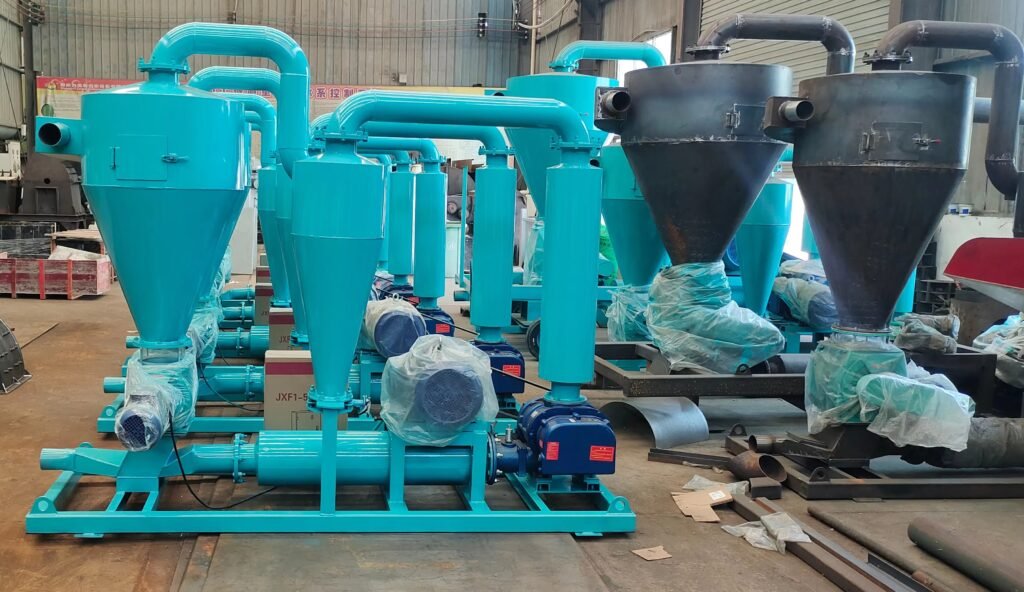
The grain conveyor capacity TPH is typically the first specification buyers examine—and for good reason. This metric directly determines whether your system can handle peak harvest demands.
1.1: Understanding Rated TPH vs. Actual Field Capacity
Published capacity figures are generally measured using dry corn or wheat under optimal conditions. Field performance can be significantly lower. Plan for a 15–20% margin when sizing equipment. A machine rated at 50 TPH will realistically deliver approximately 40–42 TPH under typical conditions with standard hose lengths.
For reference, commercial portable pneumatic conveyors are available in configurations ranging from 3 to 50 tph, while large-scale continuous ship unloaders can reach 160–800 tph depending on the application .
1.2: Farm-Level vs. Commercial Storage Capacity Requirements
Application dictates appropriate capacity:
- Farm-level and on-farm storage: 3–50 TPH range offers sufficient throughput for unloading bins and loading trucks
- Commercial grain terminals and large-scale storage: 50–80+ TPH to sustain high-volume operations
Typical portable grain vacuum conveyor systems span 3–50 tph for smaller operations, with larger motor configurations reaching 18–25 tph in the 15–20 kW range .
2. Conveying Distance & Elevation: Horizontal vs. Vertical Requirements
The relationship between conveying distance, elevation, and system performance is governed by pressure drop—a critical factor often underestimated during selection.
2.1: How Horizontal Reach and Vertical Lift Affect Airflow
Vertical lift consumes more system pressure than horizontal conveying. Adding just one bend or elbow equates to adding 10–15 feet of horizontal pipe in terms of pressure resistance .
The pneumatic grain vacuum conveyor distance capability varies significantly with system design. For example, 11 kW fans typically achieve up to 10 meters horizontal conveying with 5 meters lift, while 22 kW systems can reach 15 meters horizontal with 7 meters vertical lift .
2.2: Calculating Your Total Equivalent Pipe Length of Grain Vacuum Conveyor
For precise system sizing, calculate Total Equivalent Length by adding:
- Actual horizontal distance
- Converted vertical lift length
- Equivalent lengths for elbows and bends (typically 1.5–2.5 meters per 90° elbow)
When reaching bins at 8-10 meters height, account for this significant pressure consumption alongside horizontal distances.
3. Hose & Pipe Diameter: 4-Inch, 5-Inch, or 6-Inch System?
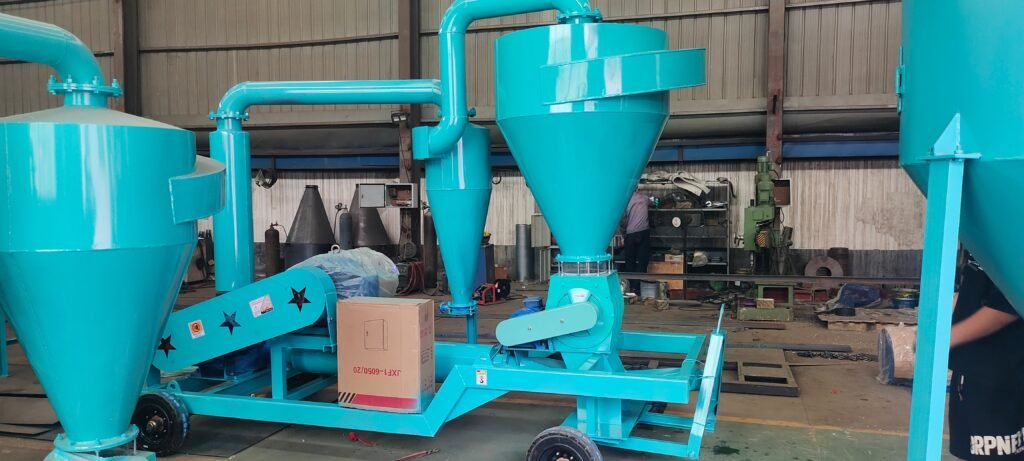
Pipe diameter selection balances airflow characteristics against physical handling requirements. The grain vacuum pipe diameter 4 inch 5 inch 6 inch decision directly impacts both capacity and operational ergonomics.
3.1: 4-Inch vs. 5-Inch vs. 6-Inch: Performance Comparison
4-inch systems:
- Capacity range: 3–5 TPH
- Flexible and relatively lightweight—ideal for smaller farms and bin clean-out
- 100 mm intake diameter typical for entry-level systems
5-inch systems:
- Capacity range: 5–10 TPH
- “Goldilocks” standard for many commercial applications
- 125 mm diameter range offers optimal balance
6-inch systems:
- 15-20 TPH capacity for heavy industrial applications
- Typically integrated into fixed-installation or truck-mounted configurations
- Significantly heavier and less manoeuvrable
3.2: Ergonomics vs. Conveying Efficiency
For operations requiring frequent repositioning of intake hoses, the weight difference between 6-inch and 8-inch systems is substantial. Consider operator fatigue and safety. Many commercial systems now include boom attachments to support hose weight and reduce strain.
[Image Placeholder: Table comparing 6-inch, 8-inch, and 10-inch performance metrics]
4. Vacuum Pressure & Airflow Balance: The Core Engine Efficiency
The relationship between vacuum pressure and airflow determines system capability. Understanding vacuum pressure vs airflow in grain conveyor design is essential for matching equipment to your operation.
4.1: High Vacuum vs. High Volume: Why Both Matter
- Vacuum pressure provides the suction force to lift material, break static friction, and overcome pipe resistance
- Airflow volume determines material velocity once in suspension
Typical fan pressures for grain conveying range from 1,500–2,400 mmH₂O (approximately 15–24 kPa), with airflow from 800–1,800 m³/h depending on model .
4.2: Positive Displacement Blower (Roots Blower) Advantage
Roots blowers deliver constant volumetric flow regardless of pressure changes—a crucial advantage over centrifugal fans. When conveying over long distances or significant vertical lifts, Roots blowers maintain conveying velocity even as system pressure increases .
These blowers are widely used in grain processing applications including pneumatic conveying, cleaning, drying, and milling processes, providing consistent air supply that ensures uniform product quality .
5. Material Characteristics & Bulk Density: Impact on Machine Sizing
Grain is not grain—grain bulk density pneumatic conveying performance varies significantly by material type. Understanding this helps prevent costly mis-specification.
5.1: Heavy Grains vs. Light Materials
Different materials require different pneumatic parameters:
| Material Type | Bulk Density | Conveying Characteristics |
|---|---|---|
| Corn, Wheat, Soybeans | High (720–770 kg/m³) | Requires higher pressure; conveys efficiently at moderate velocities |
| Oats, Rice Hulls | Low (350–450 kg/m³) | Requires higher airflow to prevent material “drop-out” |
The suspension speed—minimum air velocity needed to keep particles airborne—varies significantly between materials. Wheat requires approximately 9 m/s suspension speed, while practical conveying speeds typically range from 20–25 m/s to ensure reliable transport .
5.2: Moisture Content and Grain Fragility Considerations
High moisture increases friction, promotes clogging, and raises power requirements. Wet grain requires substantially more power to move than dry grain that flows freely.
Seed handling or fragile grains (soybeans, canola) require additional consideration. Rotary airlocks with specialized designs help reduce damage by leveling pockets and maximizing capacity while protecting grain quality.
Quick Selection Checklist: Match Your Scenario with the Right Setup
| Operation Type | Recommended TPH | Recommended Power | Recommended Pipe Diameter | Additional Considerations |
|---|---|---|---|---|
| Small farm bin clean-out | 4–5 | 11 kW | 4-inch | Lightweight, easy to position |
| Mid-size farm/on-farm storage | 5–10 | 18.5 kW | 5-inch | Industry standard; good balance |
| Commercial storage | 15–20 | 30 kW | 6-inch | Consider boom; self-contained preferred |
| Terminal/Port handling | 80+ | 110 kW+ | 10-inch | Fixed or truck-mounted |
Partner with Shandong Karanze Machinery for Customized Grain Vacuum Conveyor
At Shandong Karanze Machinery, we understand that standard specifications rarely fit every operation. With complete R&D and manufacturing capabilities, we offer fully customized grain vacuum conveyor systems tailored to:
- Specific pipe lengths and conveying distances
- Material characteristics and bulk density requirements
- Fixed capacity targets from 3–50+ TPH
- OEM/ODM configurations
Looking for a reliable, high-capacity grain vac tailored for your farm or commercial storage? [Contact the Karanze Engineering Team Today] or click the WhatsApp button below for instant equipment sizing and factory-direct pricing.